Why is my water bill so high?
Usually one of four things: the price went up, an estimated bill has caught up, your household used more water, or water is escaping somewhere. A few questions will tell you which.
Lines open Monday to Friday, 7:30am to 6:30pm
Run by ADI Leak Detection, rated 4.7 on Trustpilot from 1,624 reviews (checked 25 September 2026).
Four reasons a water bill jumps
Almost every sudden rise comes down to one of these. Your bill usually tells you which, once you know where to look.
| What happened | How to spot it on your bill | What to do |
|---|---|---|
| The price went up | The water used per day is about the same as last time, but the charge per cubic metre or the standing charge is higher. Water prices in England and Wales change every April. | Nothing is wrong at home. Compare the rates on both bills, and ask your water company if the sums still do not add up. |
| An estimated bill caught up | Your last bill had an E, or the word estimated, beside the reading. This one uses a real reading, so it charges for everything used since the last real one. | Send your water company regular readings so estimates stay close. This kind of catching up usually happens once. |
| Your household used more | The litres per day went up and you can say why: more people at home, a new shower, the garden, a hot tub or building work. | Put your bill into the water usage calculator to see how your home compares with typical use. |
| Water is escaping somewhere | Use per day jumped and nothing changed at home. The meter moves when everything is off, or you hear hissing, or the ground outside stays wet. | Test your meter. If it keeps moving with everything switched off, call a leak specialist. |
Compare litres a day, not pounds
Bills cover different numbers of days and prices change every April, so the total in pounds hides what really happened. Work out the water you used per day on each bill instead. If that barely moved, the rise came from the charges.
Cubic metres used ÷ days on the bill × 1,000 = litres a day
Use the water usage calculatorUp 70% a day. With nothing changed at home, that is worth a meter test.
Filled in with example bills. Type over them with your own.
Signs water is escaping
Most hidden leaks give themselves away somewhere, even when you cannot see water. Any of these alongside a jump in your bill is worth a meter test.
The meter moves when nothing is on
The red numbers creep up, or the little star wheel on the dial keeps turning.
A hiss or a rush with everything off
Listen at the internal stop tap, usually under the kitchen sink, when the house is quiet.
A toilet that never quite stops
A trickle into the bowl can waste up to 400 litres a day, about five full baths, according to CCW.
Wet or greener ground outside
A soft patch, or a strip of greener grass, between the pavement and the house in dry weather.
Damp you cannot explain
Patches on floors or walls near pipes, or a musty smell with no obvious cause.
Weaker taps and showers
Pressure that has slowly dropped can mean water leaving the pipe before it reaches you.
When to call a leak specialist
Call when the meter still moves with the stop tap closed, when you can hear water you cannot see, or when the ground outside stays wet. Those point to a leak on a pipe you cannot reach, and finding it is the specialist’s job.
ADI Leak Detection traces hidden leaks on water pipes with tracer gas, acoustic listening and thermal imaging. Their methods are chosen to avoid damage wherever possible, and they usually repair the leak on the same day where they can.
- 25 engineers
- Around 5,000 jobs a year
- England, Scotland and Wales
- Rated 4.7 on Trustpilot
ADI figures September 2026. Trustpilot 1,624 reviews, checked 25 September 2026.
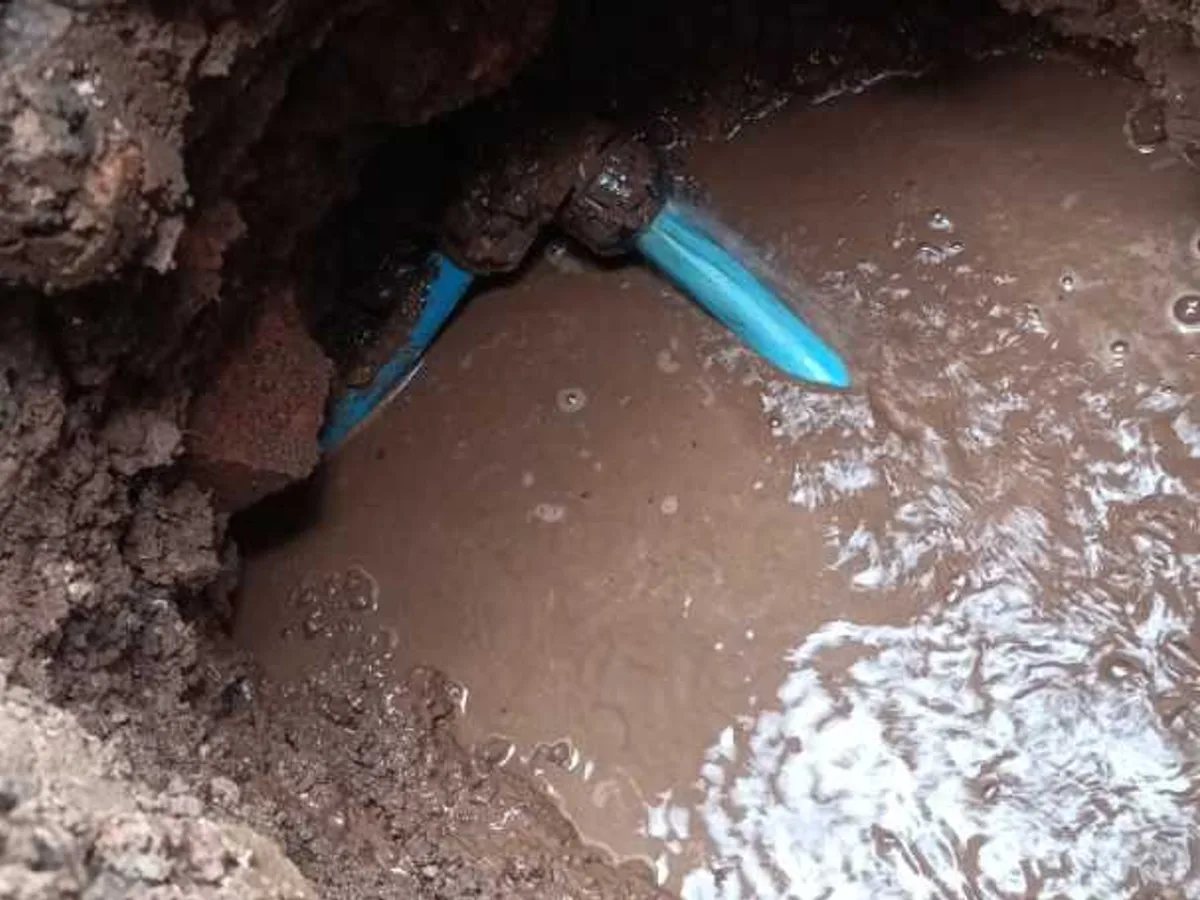
Underground, a leak like this can run for months with no sign except the bill.
A leaking supply pipe uncovered on an ADI Leak Detection job.
Questions about high water bills
Why has my water bill doubled when I am not on a meter?
Without a meter, your bill is set from your property, so the water you use cannot double it. Check whether the charges changed in April, whether a payment plan or arrears changed what you pay each month, or whether a meter has been fitted.
Your water company can break the bill down for you.
How much water should a two person household use?
About 280 litres a day, going by CCW’s average of about 139 litres a person. Homes vary a lot, with children, health needs, gardens and working from home. The water usage calculator compares your own bill.
Will my water bill go up every year?
Charges in England and Wales are set each April, so the price per cubic metre usually changes once a year. On a meter, using less still brings the bill down.
Who pays to fix a leak on my side of the boundary?
Usually you. The supply pipe from your boundary to the house is normally the homeowner’s responsibility, though some pipes are shared or run under other land. Some water companies help with supply pipe repairs, so ask yours. If you rent, tell your landlord.
Can I get money back for water lost through a leak?
Often, once it is fixed. Most water companies offer a leak allowance, with conditions that vary. See how leak allowances work.
Should I call my water company or a leak specialist?
Talk to your water company about the bill itself, estimated readings, or water leaking in the street. Call a leak specialist such as ADI Leak Detection when the leak is on your property and you cannot see where it is.
Could my water meter be wrong?
Check the long serial number printed on the meter matches the one on your bill. If it does not, you may be paying for someone else’s water. On rare occasions a home is billed for a neighbour’s use where the two share a supply pipe, and your water company can look into that.
Faults in the meter itself are uncommon. CCW notes that when an old meter does go wrong it tends to record too little, which would make a bill lower. If the serial number matches and a meter test shows no movement, ask your water company about testing the meter, and ask first whether there is a charge.